High Frequency Wood Bonding Machine: Faster and Stronger Wood Assembly
-
admin
- Posted on
- 0 comments
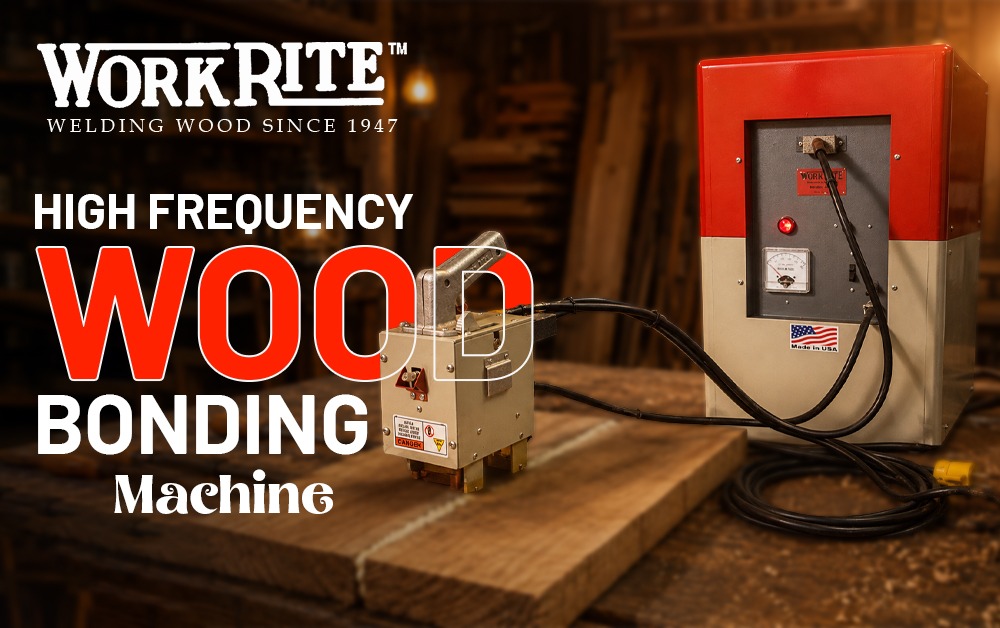
High frequency wood bonding machine technology provides woodworking manufacturers with an efficient way to cure adhesive and create strong, consistent bonds between wood components. By using radio frequency energy to generate heat within the adhesive line, this technology can significantly reduce curing time compared with conventional methods that rely mainly on external heat or extended clamping.
For manufacturers focused on improving production speed, bond quality, and workflow efficiency, a high frequency wood bonding machine can be an important addition to a modern woodworking operation. Workrite Wood Welder provides wood welding solutions designed to support demanding manufacturing applications where reliable adhesive curing and repeatable results are essential.
What Is a High Frequency Wood Bonding Machine?
A high frequency wood bonding machine is specialized equipment that uses high-frequency electromagnetic energy to accelerate the curing of compatible adhesives used in wood assembly. Instead of waiting for heat to gradually travel from the outside of the material toward the glue line, radio frequency energy produces heat within the adhesive area.
This internal heating approach allows the glue line to reach its curing temperature more efficiently. When combined with controlled pressure, the process can produce strong and uniform bonds while helping manufacturers reduce the time required for traditional clamping and adhesive curing.
The technology is particularly useful for woodworking operations where production volume, consistency, and repeatability are important.
How Does High Frequency Wood Bonding Work?
The bonding process begins with properly preparing the wood surfaces and applying a suitable adhesive. The components are then positioned accurately in the machine and placed under controlled pressure.
Once the assembly is secured, the machine applies high-frequency radio frequency energy. The energy interacts with the adhesive and generates heat within the glue line. This accelerates the curing process while pressure keeps the wood components correctly positioned.
After the required curing cycle is completed, the RF energy is stopped and the bonded component can be removed after the appropriate cooling or handling period. Proper machine settings, adhesive selection, material moisture, pressure, and cycle time all contribute to achieving consistent results.
Key Benefits of a High Frequency Wood Bonding Machine
Faster Adhesive Curing
One of the major advantages of high-frequency bonding is reduced adhesive curing time. Traditional adhesive processes can require longer clamping periods before a component is ready for the next manufacturing stage. RF-assisted curing can shorten this waiting period, helping manufacturers maintain a faster production flow.
Consistent Bond Quality
A controlled RF process can provide more uniform heating throughout the adhesive area. Consistent heating and pressure can help reduce variations in curing and support repeatable bonding results across production runs.
Improved Production Efficiency
Reducing curing time can help manufacturers move components through different stages of production more efficiently. Faster turnaround can also make better use of factory floor space because products do not need to remain in clamps for extended periods.
Reduced Manual Handling
Traditional bonding processes may involve extensive clamping, waiting, and manual handling. An automated or semi-automated high frequency bonding system can streamline these steps and make the overall workflow easier to manage.
Stronger, Reliable Wood Joints
When the correct adhesive, pressure, RF power, and curing cycle are used, high-frequency bonding can produce dependable adhesive joints. This is especially valuable for manufacturers that require consistent quality across repeated production cycles.
Applications of High Frequency Wood Bonding Technology
A high frequency wood bonding machine can be used for a wide range of woodworking and furniture manufacturing applications. The technology can be particularly valuable when manufacturers need fast curing and accurate assembly of wood components.
Depending on the machine configuration and adhesive system, applications may include furniture components, frames, curved or shaped assemblies, cabinet components, architectural woodwork, and other engineered wood products.
The suitability of RF bonding depends on the specific materials, adhesive, component dimensions, joint design, and production requirements. Manufacturers should evaluate these factors before selecting equipment and establishing production parameters.
Why RF Heating Is Different From Conventional Curing
Conventional curing methods often depend on heat transferring through the material toward the adhesive joint. This can take considerable time, especially when the material is thick or the glue line is located inside an assembly.
Radio frequency technology takes a different approach by generating heat within the adhesive system. This can allow the glue line to heat more rapidly and uniformly under appropriate operating conditions.
The result is a bonding process that can be integrated into high-efficiency manufacturing environments where shorter curing cycles and consistent production are priorities.
Choosing the Right High Frequency Wood Bonding Machine
Selecting the right machine requires more than simply comparing equipment size or power. Manufacturers should consider the dimensions of their components, production volume, adhesive type, required curing time, pressure requirements, and available factory space.
Machine configuration should also match the intended application. A system designed for high-volume industrial production may have different requirements from equipment intended for smaller production runs.
It is also important to work with an experienced equipment provider that understands RF wood bonding and can help determine an appropriate configuration for the intended manufacturing process.
Improve Your Wood Manufacturing Process With RF Technology
A high frequency wood bonding machine can help woodworking manufacturers improve adhesive curing efficiency while maintaining consistent pressure and repeatable production cycles. By generating heat directly within the adhesive area, RF technology can reduce curing delays and support a more streamlined manufacturing workflow.
For companies looking to modernize their wood bonding process, investing in the right RF equipment can provide a practical way to improve productivity, reduce unnecessary waiting time, and achieve dependable bonding results.
Explore Workrite Wood Welder to learn more about high-frequency wood bonding solutions and determine which equipment configuration can support your manufacturing requirements.
FAQs About High Frequency Wood Bonding Machines
1. What is a high frequency wood bonding machine?
A high frequency wood bonding machine uses radio frequency energy to generate heat within the adhesive layer between wood components. This accelerates adhesive curing compared with conventional methods. Controlled pressure holds the components securely during the process, helping manufacturers achieve strong, consistent, and repeatable wood joints while reducing overall curing time.
2. How does a high frequency wood bonding machine work?
The process starts by applying a suitable adhesive to the prepared wood surfaces. Components are positioned and placed under pressure inside the machine. High-frequency energy is then applied to the bonding area, generating heat within the adhesive. After the required curing cycle, the RF energy stops and the bonded component can be removed.
3. What are the benefits of high frequency wood bonding?
A high frequency wood bonding machine can provide faster adhesive curing, consistent bond quality, reduced production waiting time, and improved manufacturing efficiency. Because heating occurs within the adhesive area, the process can provide more controlled curing than conventional methods. It can also reduce manual handling and help manufacturers maintain more consistent production cycles.
4. Where can high frequency wood bonding machines be used?
High frequency wood bonding machines can support various woodworking and furniture manufacturing applications. Depending on the equipment configuration and adhesive system, they may be used for furniture components, frames, cabinet parts, architectural woodwork, curved assemblies, and other wood products. The appropriate application depends on material type, adhesive compatibility, joint design, and production requirements.
5. How do I choose the right high frequency wood bonding machine?
Choosing the right high frequency wood bonding machine requires evaluating component dimensions, production volume, adhesive type, curing requirements, pressure needs, and available workspace. Manufacturers should also consider machine configuration, operating controls, and application requirements. Working with an experienced RF wood bonding equipment provider can help identify a suitable system for reliable and efficient production.