
Buy Wood Welding Machine for Faster, Stronger Wood Bonding
-
admin
- Posted on
- 0 comments
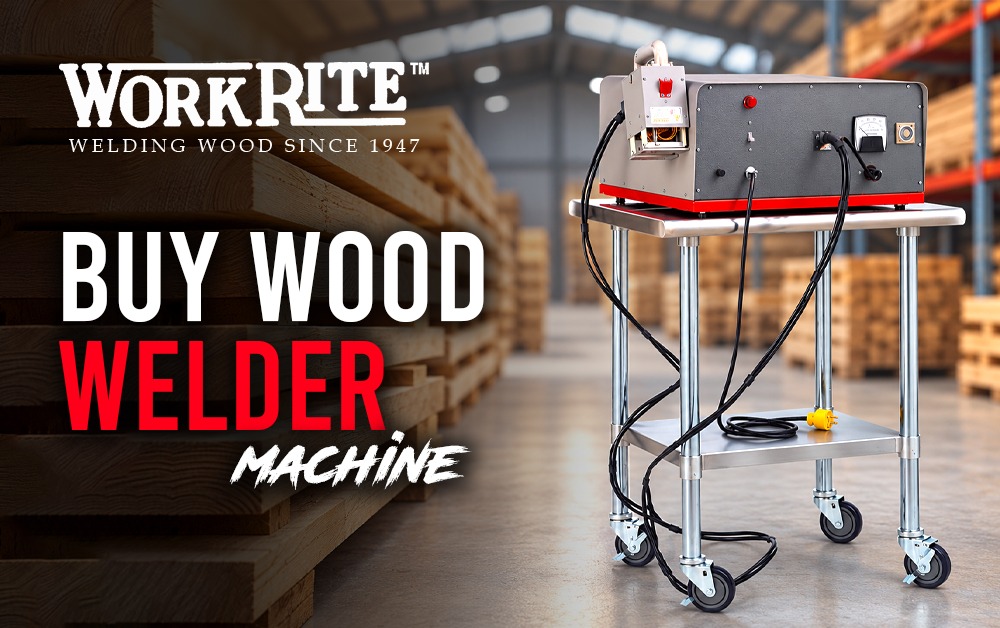
Buy wood welding machine equipment when your woodworking operation needs faster adhesive curing, reduced clamping time, and a more efficient production process. A high-frequency wood welder uses radio frequency energy to accelerate the curing of water-based wood glue directly within the joint. This technology can help manufacturers move glued assemblies through production faster while maintaining consistent and reliable bonding. WorkRite has been manufacturing and supporting high-frequency wood welding equipment for decades, with machines designed for professional woodworking and furniture production.
What Is a Wood Welding Machine?
A buy wood welding machine is a specialized RF bonding system that uses high-frequency energy to cure adhesive between wood components. Unlike conventional bonding methods that depend primarily on waiting for glue to dry naturally, RF technology generates heat within the adhesive area. This significantly reduces the time required for the glue to set and allows manufacturers to handle bonded components sooner.
The process is particularly useful when production involves repeated wood assemblies and conventional clamps would otherwise remain occupied for extended periods. By accelerating the curing stage, a wood welder can help improve workspace utilization, reduce production bottlenecks, and create a smoother manufacturing workflow.
Why Buy Wood Welding Machine Equipment?
When you buy wood welding machine equipment for a production environment, you are investing in a process designed to make wood bonding faster and more practical. One of the primary advantages of WorkRite wood welders is their ability to greatly reduce clamping time and set glue in seconds under suitable operating conditions.
Faster curing can be especially valuable for manufacturers producing large quantities of wood components. Instead of keeping assemblies clamped while waiting for conventional adhesive curing, operators can complete the RF curing process and continue with subsequent production steps. This can help increase throughput without requiring the same amount of additional clamping space.
How High-Frequency Wood Welding Works
High-frequency buy wood welding machine uses dielectric heating to accelerate adhesive curing. After the wood components are properly positioned and adhesive is applied to the bonding area, the workpiece is held in the required position while RF energy is delivered through the hand unit and electrodes.
The high-frequency energy interacts with the adhesive, producing heat within the glue line. Because the heating occurs at the bonding area rather than relying only on heat from the surrounding environment, the adhesive can cure rapidly.
WorkRite’s Model 4000 operates at a radio frequency of 27.12 MHz and is designed for heavy-duty production applications. Its high-frequency current is delivered to the glue line through the welding system, making it suitable for operations where speed and continuous use are important.
Reduce Clamping Time in Wood Manufacturing
One of the biggest reasons manufacturers choose to buy wood welding machine equipment is to reduce the time assemblies spend under clamps. Conventional glue bonding can require components to remain secured until the adhesive reaches the necessary strength. When production volumes increase, this can create a shortage of available clamps and working space.
RF wood welding changes this workflow by accelerating adhesive curing. Once the glue line has received the appropriate RF treatment, the assembly can generally move to the next stage much sooner. This helps manufacturers use their production area more efficiently and can reduce delays between assembly operations.
Cleaner Wood Assemblies With Fewer Visible Fasteners
Wood welding can also support cleaner-looking assemblies by reducing the need for mechanical fastening in suitable applications. WorkRite specifically identifies the elimination of unsightly nails or staples from wood surfaces as one of the benefits of its wood welders.
For manufacturers focused on appearance and finish quality, reducing visible fasteners can make a significant difference. A properly prepared adhesive joint can provide a clean surface while allowing manufacturers to concentrate on sanding, finishing, painting, or other downstream processes.
Designed for Professional Production
Not every woodworking operation has the same production requirements, which is why machine selection should be based on the scale and type of work being performed. WorkRite offers multiple wood welder models, including the Model 3000, Model 4000, and the newer Model 5000. The company also provides replacement parts and accessories to support existing equipment.
The Model 4000 is built for heavy-duty production work in larger factories where speed and continuous operation are important. Its specifications include a maximum voltage of 115 VAC, maximum current of 18 amps, a 13-foot coaxial cable, and 27.12 MHz radio frequency operation.
Applications for Wood Welding Technology
A high-frequency wood welder can be valuable across many areas of woodworking where adhesive bonding and rapid curing are required. WorkRite notes that its RF welders are used by cabinet manufacturers, door companies, furniture factories, and other related woodworking businesses.
The technology can be considered when production involves repetitive bonding operations and manufacturers want to shorten the time between glue application and handling. It is also useful for businesses looking to improve consistency and reduce dependence on large numbers of conventional clamps.
What to Consider Before You Buy Wood Welding Machine Equipment
Before you buy wood welding machine equipment, consider several important factors. First, determine the volume and type of wood components you manufacture. Your production requirements will help determine whether a standard machine or a heavy-duty production model is more appropriate.
You should also consider the adhesive used in your process. WorkRite states that its wood welders can be used with water-based wood glue and recommends pre-catalyzed glues for faster results.
Other considerations include available electrical power, workpiece dimensions, electrode and hand-unit requirements, operator training, production frequency, and ongoing maintenance support. Choosing equipment based on your actual manufacturing process can help ensure that the machine delivers practical value over the long term.
Reliable Support and Replacement Parts
Buying a wood welding machine is not only about selecting the equipment itself. Long-term access to replacement components and technical support is also important for production facilities that depend on their machinery every day.
WorkRite provides replacement parts and accessories for its wood welding systems, including hand units, coils, electrode plugs, coaxial cable components, and other equipment-related parts. The company also continues to support existing WorkRite RF machines, with thousands of machines still in use.
Choose WorkRite for High-Frequency Wood Welding
WorkRite has a long history in high-frequency RF equipment. The company states that it produced its first portable RF machines for commercial use in 1947 and has continued manufacturing and supporting high-frequency wood welders for the woodworking industry.
For manufacturers searching for an efficient way to accelerate adhesive curing, reduce clamping time, and improve production flow, a high-frequency wood welder can be a valuable addition to the manufacturing process.
If you are ready to buy wood welding machine equipment, explore WorkRite’s wood welders and compare the available solutions according to your production requirements. With dedicated RF technology, heavy-duty machine options, replacement parts, and industry experience, WorkRite provides wood bonding equipment built around the needs of professional woodworking manufacturers.
Frequently Asked Questions About Buying a Wood Welding Machine
1. What is a wood welding machine used for?
A buy wood welding machine uses high-frequency radio frequency energy to accelerate adhesive curing between wood components. It helps manufacturers create strong, consistent bonds while significantly reducing the time assemblies need to remain clamped. This technology is commonly used in woodworking operations where faster production, reliable bonding, and improved workflow efficiency are important.
2. Why should I buy a wood welding machine?
When you buy wood welding machine equipment, you can improve production speed by reducing adhesive curing and clamping time. RF technology generates heat within the glue line, allowing the adhesive to cure much faster than conventional methods. This can help manufacturers increase throughput, reduce production bottlenecks, and use valuable workspace more efficiently.
3. How does a high-frequency wood welder work?
A high-frequency wood welder applies RF energy to the adhesive between properly positioned wood components. The electromagnetic energy creates internal heating within the glue line, accelerating the curing process. WorkRite wood welders operate at 27.12 MHz, providing controlled high-frequency energy that helps achieve rapid adhesive curing and dependable wood-to-wood bonding.
4. What should I consider before buying a wood welding machine?
Before you buy wood welding machine equipment, consider your production volume, component sizes, adhesive type, available electrical supply, and required curing speed. You should also evaluate machine capacity, electrode requirements, operator needs, maintenance, replacement parts, and technical support. Selecting equipment based on your actual production requirements helps ensure efficient and reliable long-term operation.
5. Who can benefit from a wood welding machine?
Wood welding machines can benefit furniture manufacturers, cabinet manufacturers, door companies, and other woodworking businesses that rely on adhesive bonding. RF curing is particularly useful for production environments where conventional glue curing and extended clamping create delays. By accelerating the bonding process, manufacturers can improve workflow efficiency and move assemblies through production more quickly.
