
RF Welding Machine for Wood: The Future of Fast and Efficient Wood Bonding
-
admin
- Posted on
- 0 comments
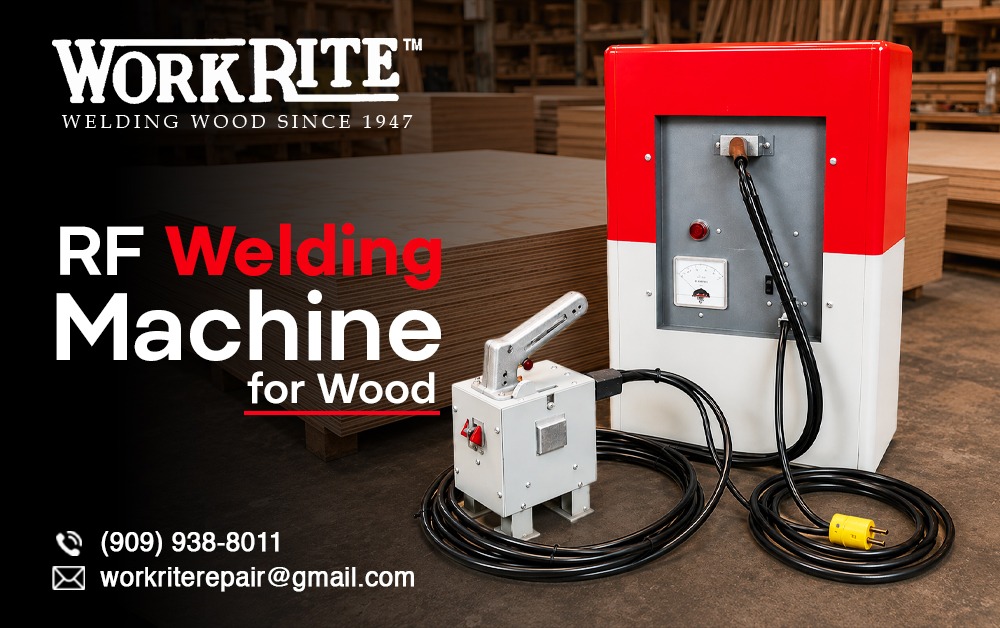
RF Welding Machine for Wood and Its Growing Importance in Modern Manufacturing
RF welding machine for wood technology has transformed the way woodworking manufacturers approach adhesive bonding. As production demands continue to increase, manufacturers are looking for methods that can reduce curing time, improve workflow efficiency, and maintain the highest standards of product quality. Traditional clamping methods often require extended drying periods that slow production and create bottlenecks on the shop floor. Radio Frequency (RF) wood welding technology addresses these challenges by accelerating adhesive curing directly within the glue line, allowing manufacturers to achieve strong bonds in a matter of seconds.
For companies producing furniture, cabinetry, doors, windows, millwork, and custom wood products, RF welding technology has become an essential tool for improving productivity without compromising craftsmanship. By utilizing high-frequency energy, manufacturers can dramatically reduce waiting times and move products through production faster than ever before.
Understanding How RF Wood Welding Technology Works
Unlike conventional heating methods that transfer heat from the outside inward, an RF welding machine for wood generates heat directly within the adhesive itself. The machine emits radio frequency energy that activates the water molecules present in water-based wood glues. This molecular activity creates internal heat exactly where it is needed—the glue line.
Because the heat is generated within the adhesive rather than on the surface of the wood, the curing process becomes significantly faster and more uniform. The result is a strong and consistent bond that can be achieved in seconds rather than minutes or hours. This technology eliminates many of the delays associated with traditional clamping and drying methods, making it particularly valuable for high-volume manufacturing environments.
Why Traditional Wood Gluing Methods Create Production Challenges
Many woodworking operations still rely on conventional adhesive curing methods that require prolonged clamp times. While effective, these methods often create inefficiencies throughout the manufacturing process. Production schedules can become dependent on drying times, forcing manufacturers to allocate valuable floor space for curing components.
Extended clamp times also increase labor requirements and limit the number of products that can be completed during a shift. In high-demand manufacturing environments, these delays can directly impact profitability and delivery schedules.
An RF welding machine for wood eliminates these limitations by dramatically reducing adhesive curing times. Components can often be handled, moved, and processed almost immediately after bonding, creating a more streamlined and efficient production workflow.
The Impact of RF Welding Technology on Manufacturing Productivity
Speed is one of the most significant advantages of RF wood welding technology. When adhesive bonds can be completed within seconds, manufacturers gain the ability to increase output without expanding facilities or adding additional labor resources.
For businesses seeking to remain competitive in today’s market, increasing throughput without sacrificing quality is a major advantage. RF welding technology provides exactly that opportunity.
Superior Bond Quality Through Controlled Adhesive Curing
While production speed is important, bond quality remains the ultimate priority in woodworking applications. An RF welding machine for wood delivers exceptional bond consistency because the energy is concentrated precisely where the adhesive is located.
Traditional curing methods may result in uneven drying conditions depending on temperature, humidity, and material thickness. RF technology minimizes these variables by generating uniform heat throughout the glue line. This controlled curing process helps create stronger and more reliable bonds that meet demanding performance requirements.
Manufacturers can achieve greater confidence in their finished products while reducing the risk of adhesive-related defects or failures.
Applications Across the Woodworking Industry
The versatility of RF Welding Machine for Wood has made it a valuable solution across a wide range of woodworking sectors. Furniture manufacturers use RF welders to accelerate assembly operations and improve production efficiency. Cabinet makers benefit from reduced clamping times that allow projects to move quickly through fabrication.
Door and window manufacturers utilize RF wood welding systems to strengthen joints while maintaining high-volume production schedules. Architectural millwork companies, custom woodworking shops, and specialty wood product manufacturers also rely on radio frequency technology to improve workflow and increase productivity.
Whether producing handcrafted custom pieces or large-scale commercial products, manufacturers can benefit from the speed and consistency offered by RF welding equipment.
Why Manufacturers Choose WorkRite RF Wood Welders
For decades, WorkRite has been recognized as a leader in RF wood welding technology. The company pioneered portable radio frequency wood welding solutions designed specifically for the woodworking industry. WorkRite machines provide manufacturers with a practical and efficient method for reducing adhesive curing times while maintaining exceptional bond strength.
As production requirements continue to evolve, WorkRite remains committed to delivering innovative solutions that help manufacturers increase productivity while maintaining the highest quality standards.
Conclusion
RF welding machine for wood technology represents a significant advancement in modern woodworking manufacturing. By accelerating adhesive curing directly within the glue line, RF systems eliminate production bottlenecks, improve workflow efficiency, and create strong, reliable bonds in a fraction of the time required by traditional methods.
For manufacturers seeking greater productivity, enhanced quality control, and faster turnaround times, RF wood welding technology offers a proven solution. With decades of industry experience and innovation, WorkRite continues to help woodworking professionals unlock the full potential of radio frequency adhesive curing technology.
FAQs for RF Welding Machine for Wood
Q1. What is an RF welding machine for wood?
An RF welding machine for wood uses radio frequency energy to rapidly cure water-based adhesives within the glue line. Unlike traditional bonding methods, it generates heat directly inside the adhesive, significantly reducing curing time and allowing manufacturers to achieve strong, reliable wood joints in seconds.
Q2. How does RF wood welding improve manufacturing efficiency?
RF wood welding technology accelerates adhesive curing, reducing the need for long clamp times and minimizing production delays. Manufacturers can move bonded components through production faster, increase output, optimize workspace utilization, and improve overall workflow efficiency without sacrificing bond quality or product durability.
Q3. What industries commonly use RF welding machines for wood?
RF welding machines are widely used in furniture manufacturing, cabinet production, door and window fabrication, architectural millwork, flooring, and custom woodworking. These industries rely on RF technology to improve production speed, create strong adhesive bonds, and maintain consistent product quality across high-volume operations.
Q4. Can RF welding machines produce stronger wood bonds than traditional methods?
RF welding machines help create highly consistent and durable adhesive bonds by generating uniform heat throughout the glue line. This controlled curing process reduces variations caused by environmental conditions and supports stronger, more reliable joints compared to conventional adhesive curing techniques.
Q5. Why choose an RF welding machine for wood applications?
An RF welding machine for wood offers faster curing times, improved productivity, reduced clamp requirements, and enhanced bond consistency. Manufacturers benefit from shorter production cycles, increased operational efficiency, and the ability to deliver high-quality wood products while meeting demanding production schedules.
